
Hurting right now?
Call and we will get you seen today, so you can get back to sleeping, working and moving without pain.
Sciatica Symptoms and What They Signal
So what does sciatica feel like? Most patients describe a sharp, shooting pain that starts in the lower back or hip and travels down one leg. Sometimes it's a dull ache. Other times it's a burning or electric jolt that stops you mid-step.
If you ride, it is the combination that gets you. An hour on the bike folds you at the hips, then you sit at a desk and hold nearly the same angle for eight more hours. That is what we end up treating, usually about a month later. It does not help that Sunnyvale promised 17.1 miles of protected bike lanes back in 2020 and has built under a mile, so you are gripping the bars the whole way in.
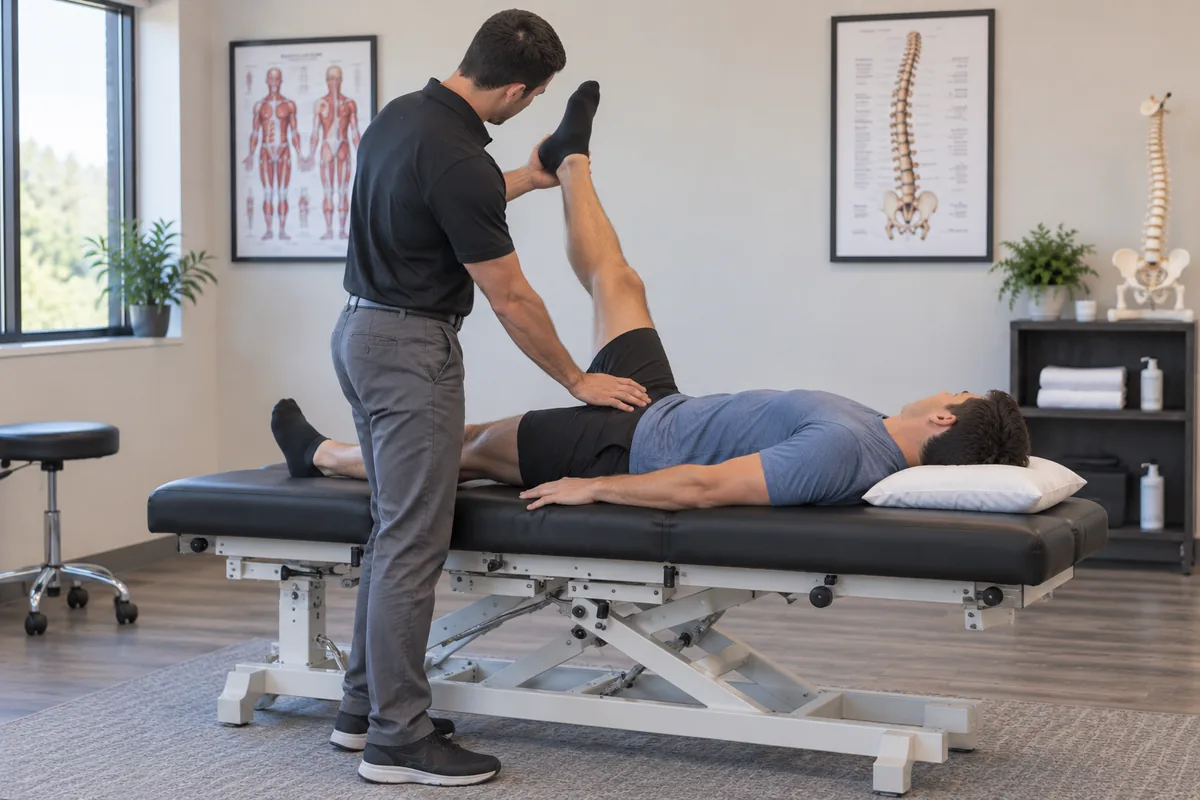
- Pain running from your lower back through your buttock and down one leg
- Numbness or tingling in the thigh, calf, or foot
- A weak feeling in the leg, like it might give out
- Sharp pain when you sit, stand up, or twist your torso
- Symptoms on just one side of your body, not both
Here's the part that catches people off guard. The pain doesn't always start right away. We see this often with car accident patients. They walk away from the crash feeling stiff but okay. Then two or three days later the leg pain shows up. That delay is exactly why a same-day exam matters. It puts a timestamp on your injury before an insurance company can argue it happened somewhere else.
These symptoms usually signal pressure on the sciatic nerve, often from a herniated disc or a bulging disc pressing against nerve roots in your lower spine. A pinched nerve can also happen from swelling and inflammation after impact, even without a major disc injury. Either way, the nerve is irritated and it needs attention, not guesswork.
Not sure if your pain counts as sciatica or just soreness from the wreck? That confusion is common, and it's exactly why we do a full exam instead of assuming.
Matching Treatment Technique to the Cause
Not every sciatic nerve gets pinched the same way. A car accident jams the spine different than a slip and fall does, and a sports injury usually hits somewhere else entirely. That's why we don't run one adjustment on every patient who walks in holding their lower back.
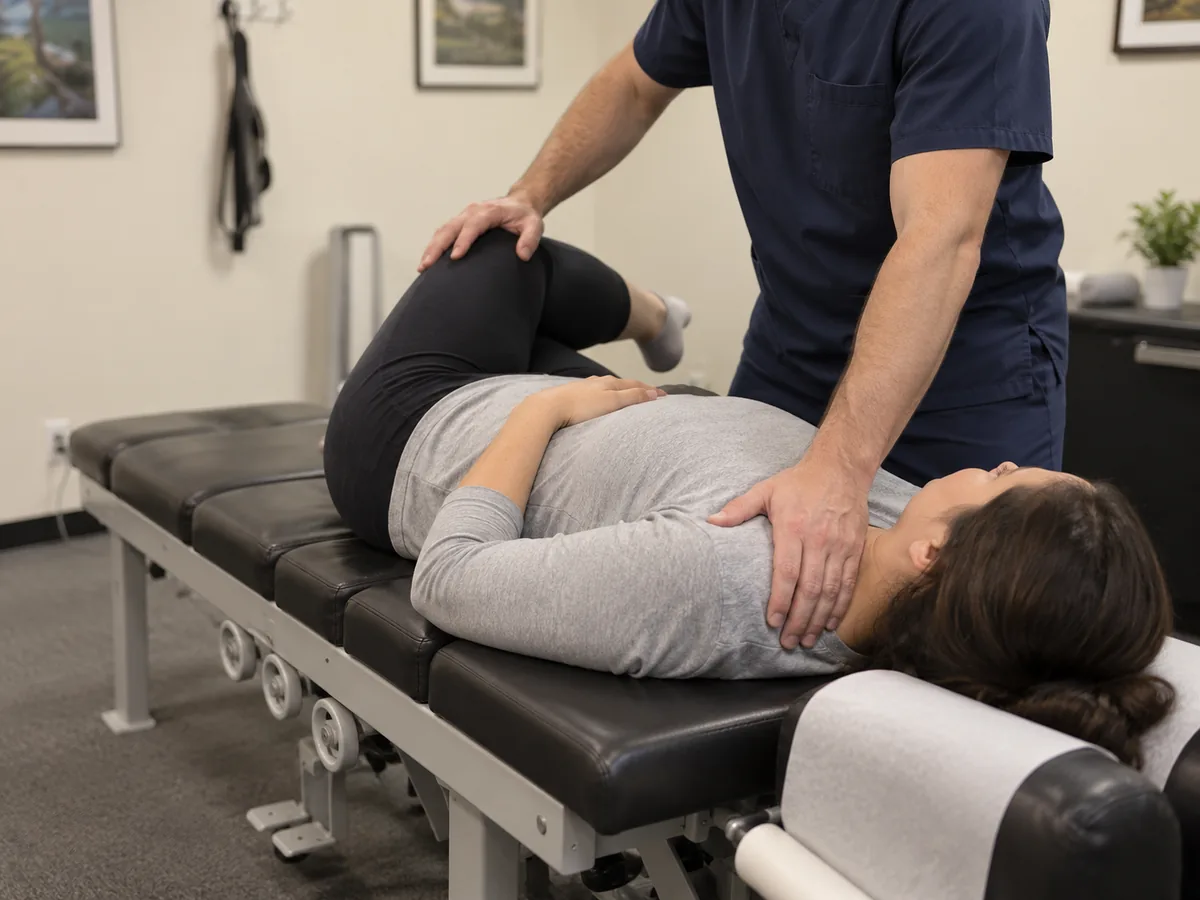
If your disc is bulging or herniated and pushing into the nerve root, we lean on flexion-distraction, also called the Cox technique. It gently stretches the spine to take pressure off the disc without cranking on it. For patients whose sciatica comes from a jammed or misaligned joint, we'll often use the Gonstead technique or diversified adjusting, both of which target the exact segment that's out of place instead of the whole spine.
Some patients can't tolerate a hands-on twist yet, the muscles are too guarded and the pain's too sharp. In those cases we start with the Thompson drop table or the activator method, both low-force options that still move the joint without much manual pressure.
Spinal decompression therapy comes in for the cases where the nerve's been under pressure a while and needs sustained, gentle traction over several visits rather than one quick adjustment.
Here's the thing. Most of the time, the technique choice isn't guesswork. It's based on exactly what we find during your exam and what your body tells us it can handle that day.
We adjust the plan as you heal, which also gives your attorney and the insurance company a clear record showing your treatment matched your actual injury, step by step.
Same-Day Exams After an Accident or Fall
Here's what we see all the time. Someone gets rear-ended on El Camino Real, walks away feeling shaken but okay, and figures the achy hip or tingly leg will fade on its own. Then three days later that tingle turns into shooting pain down the back of the leg. That's sciatica showing up late, and it's exactly why we push for same-day exams.
A car crash or a bad fall can jolt a disc out of place or pinch the sciatic nerve without you feeling much right away. Adrenaline hides pain. So does swelling that hasn't built up yet. We check you the same day so we catch the nerve involvement before it turns into something that lingers for months.
This isn't just about your comfort, though that matters plenty. It's about your claim too.
- A same-day exam creates a timestamped medical record linking your sciatica symptoms directly to the accident
- Waiting even a week gives insurance adjusters room to argue something else caused the pain
- Early documentation captures numbness, tingling, or leg weakness before it fades or changes
- It gives your attorney real evidence, not just your word, that the injury started at the crash
So if you got hit near Fair Oaks or slipped on a wet floor at a store off Mathilda Avenue, don't wait to see how you feel tomorrow. Come in now. We're treating patients on a lien basis with attorneys, so most accident cases mean zero out-of-pocket cost while we figure out what's going on and start treatment. Se habla espanol, and we'll walk you through everything in whichever language feels easiest.
When Sciatica Pain Needs Same-Day Evaluation vs. Can Wait
So how do you know if today's the day you call, or if you can just rest and see? Here's the honest answer. Most of the time, if sciatica pain showed up after a car accident, a fall, or lifting something wrong, you don't want to wait it out.
Pain that shoots from your low back down through your hip and leg is your nerve telling you something's compressed or irritated. Left alone, that irritation can turn into long-term nerve damage. We've seen patients wait two or three weeks hoping it would fade, and by the time they came in, the disc had shifted enough to make recovery slower and harder.
- Numbness, tingling, or weakness in your leg or foot that's getting worse, not better
- Pain from a car accident or fall, even if it started as just a dull ache
- Sciatica that keeps you from sitting, standing, or sleeping normally
- Any loss of bladder or bowel control, which needs emergency medical attention right away, not chiropractic care
- Pain that's lasted more than a few days with no improvement
If your pain is mild, came on after a long day of yard work, and it's already easing up on its own, you probably don't need a same-day visit. Rest, ice, and gentle movement might be all you need for a day or two.
But if it's from an accident, it's spreading, or it's getting worse instead of better, that's different. That's the pattern we watch for. Sunnyvale's commute traffic on 101 and 237 means rear-end collisions happen often, and whiplash-type injuries frequently bring sciatica along with them days later.
Not sure which category you fall into? That's really common, and it's exactly why a same-day exam matters.
How Sciatica Care Is Billed and What to Ask First
Here's what stops most people from calling. They're in pain, but they're more scared of the bill. So let's clear that up right now.
In most injury cases, chiropractic care gets billed one of a few ways. Sometimes it runs through your health insurance. Sometimes it goes through the other driver's insurance if you were hit in a crash. And sometimes, when there's an attorney involved, the clinic works on what's called a lien. That means treatment happens now, payment comes later, out of the settlement.
We work on a lien basis with attorneys. In most accident cases, that means you get care with $0 out-of-pocket while your claim moves forward. No upfront bill standing between you and getting your sciatica looked at.
Before you start treatment anywhere, ask a few things. It protects you.
- Do you bill on a lien basis if I have an attorney or an open claim?
- Will my records be documented in a way my attorney or insurance company can use?
- Do I owe anything out-of-pocket while my case is pending?
- How often will I need to be seen, and who tracks that for my claim?
People are often surprised how simple this part is once someone explains it plainly. The paperwork side matters too, not just the treatment. A thin file with one or two visits looks bad to an insurance adjuster, so ask how documentation is handled from day one, not after the fact.
Frequently Asked Questions
Sciatica usually feels like sharp, shooting pain that starts in your lower back and travels down one leg, often with numbness or tingling in your thigh, calf, or foot. Regular soreness tends to stay in one spot and fade in a day or two. If you feel weakness in your leg, pain on just one side, or a burning jolt when you sit or twist, come in for a full exam instead of guessing what it is.
Sciatica pain often shows up two or three days after a crash, not right away, because adrenaline and swelling hide symptoms at first. We see this constantly with accidents near El Camino Real and Fair Oaks. A same-day exam creates a timestamped record linking your symptoms to the accident, which protects your claim if pain develops later and an insurance adjuster tries to argue something else caused it.
Most patients notice pressure easing within the first few visits, though full nerve recovery can take several weeks depending on whether a disc is bulging, herniated, or just inflamed. Patients who wait two or three weeks before coming in often need longer to recover because the disc has shifted further. Getting examined early, especially after an accident or fall, gives you the best shot at a quicker turnaround.
It depends on what's causing the pressure on your nerve, which we find during your exam. If a disc is bulging or herniated, we often use flexion-distraction, a gentle stretching technique that relieves pressure without forcing the spine. If a joint is jammed or misaligned, we may use Gonstead or diversified adjusting instead. For patients too sore for hands-on work, we start with a low-force option like the activator method.
Waiting is risky if your sciatica started after an accident, fall, or lifting injury, since untreated nerve irritation can turn into longer-term damage. We've seen patients wait two or three weeks hoping it would fade, only to find the disc had shifted further, making recovery slower. If your pain is getting worse, or you have numbness or leg weakness, come in the same day instead of riding it out.
The same rule applies. A fall can jolt a disc or pinch your sciatic nerve just as easily as a car crash, and the pain often shows up days later. Getting a same-day exam after a fall near Mathilda Avenue documents your injury while it's fresh, which matters for your health and for any claim you might need to file. We treat accident cases on a lien basis, so most patients have zero out-of-pocket cost while we sort it out.
Start feeling like yourself again
Call (408) 329-9604 and we will get you in today.