
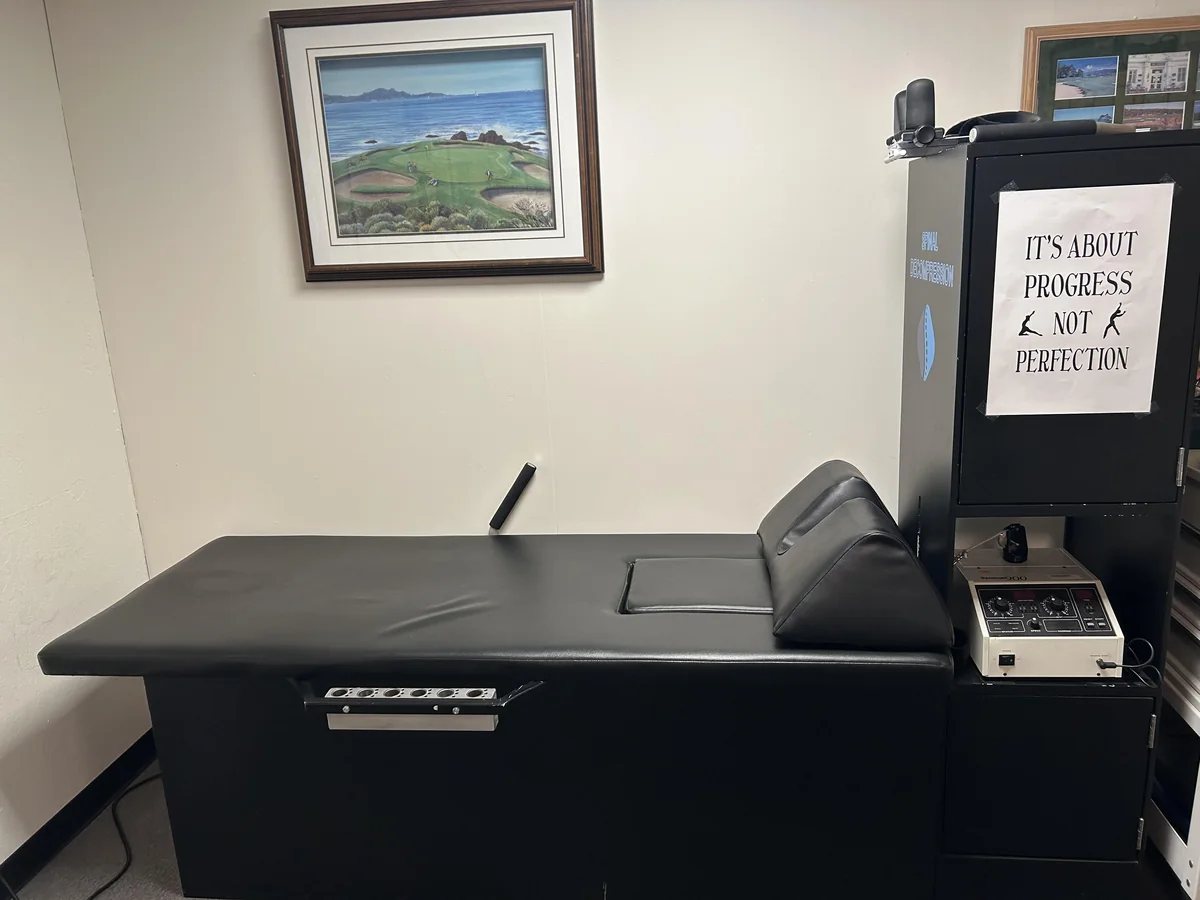
Signs You May Need Spinal Decompression
So how do you know if it's your disc and not just a sore muscle? Muscle pain tends to fade within a few days. Disc pain doesn't. It lingers, it travels, and it often gets worse when you sit for too long or try to stand back up.
Decompression gets marketed to athletes. Look at any ad for it. Meanwhile about one in eight people in this city is over 65, the Senior Center on Remington runs programs from 50 up, and that is much closer to who actually sits down in front of us. Discs lose water and height as the years go by. A lot of the pain that shows up at 60 never had an accident behind it at all, just two decades of ordinary compression. The marketing has not caught up and probably never will.
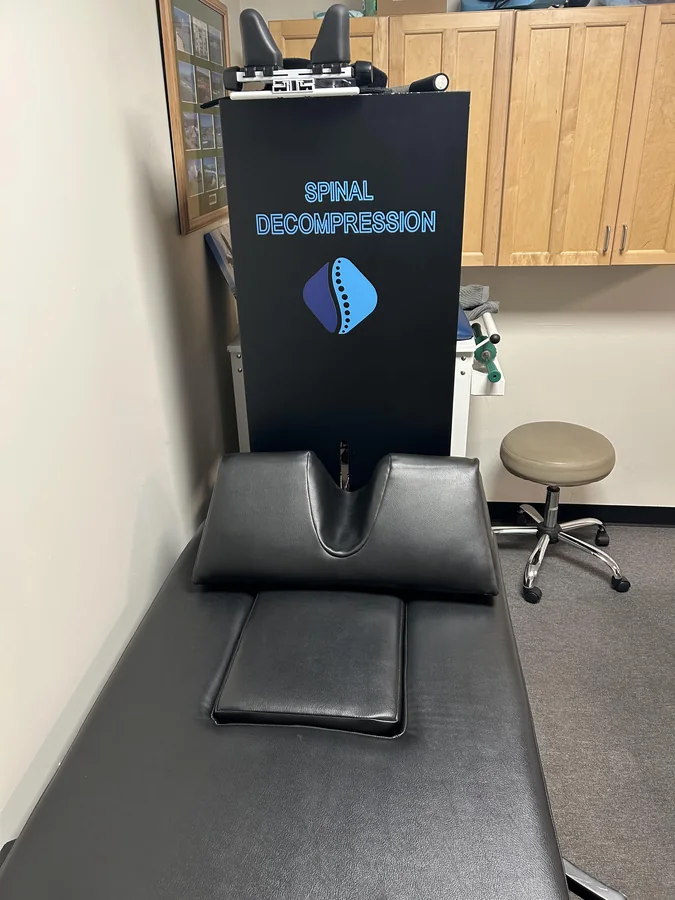
We had a patient last month who was rear-ended near Lawrence Expressway. She felt fine that day, just a little stiff. Two weeks later she couldn't feel her right foot. That's disc damage showing itself late, which happens more than people think.
- Pain, tingling, or numbness that runs down one leg or arm
- Lower back or neck pain that gets worse when sitting
- Weakness in a hand, foot, or leg you didn't have before
- Pain that started mild after your accident but keeps growing
- A herniated disc or bulging disc diagnosis from imaging
Most of the time, when someone describes pain that shoots below the knee or elbow, we're looking at nerve involvement from a disc problem. That's not something to wait out.
If your pain stays in one spot and doesn't travel, decompression may not be the right fit. Sometimes it really is just muscle strain from bracing during impact, and other chiropractic care will do the job. We'll tell you straight if that's the case.
Why Waiting Makes Whiplash and Disc Injuries Worse
Here's what we see every week. Someone gets rear-ended, feels stiff for a day or two, and figures it'll pass on its own. Then three weeks later they're calling us because they can't turn their head to check their blind spot. That delay matters more than people think.
Whiplash doesn't always hurt right away. The muscles and ligaments in your neck get stretched fast, and the swelling that causes real pain can take 24 to 72 hours to show up. By the time it hurts, the tissue's already inflamed. A disc that got compressed in the crash has had days to settle into a bad position.
Left alone, that pattern gets worse, not better.
- Inflamed discs can bulge further without decompression, sometimes pressing on a nerve root and causing pain to run down an arm or leg
- Scar tissue starts forming around injured ligaments within the first few weeks, and it forms in whatever position the neck sits in most
- Muscles guard the injury by tightening up, which limits motion and can turn into chronic stiffness
- Nerve irritation from a pinched nerve tends to spread, so what started as neck pain can show up as headaches or numbness in the hand
So what does that mean for you? It means the gap between the accident and your first exam isn't just a scheduling detail. It's tissue healing in the wrong shape. Non-surgical spinal decompression works by gently taking pressure off the disc and nerve. It works a lot better on a fresh injury than one that's had two months to scar over.
Not sure if your ache is 'bad enough' to get checked? That's the question almost every patient asks us, and, if you were in a crash, it's worth finding out same-day rather than guessing.
When Spinal Decompression Is Not the Right First Step
Here's something we tell people on the phone almost every day. Spinal decompression therapy is not always the first move. If you were just in a car accident or took a hard fall, you need an exam before anyone puts you on a traction table. Fresh injuries can hide things. Swelling masks a fracture. Adrenaline masks pain that shows up two days later as a stabbing headache or numb fingers.

We see this every week. Someone walks in a day or two after a fender bender in Sunnyvale, feeling stiff but functional, convinced they just need their back stretched out. Then the exam finds a disc issue or nerve involvement that needs a different approach first, maybe manual adjustment, maybe just rest and monitoring before anything mechanical touches the spine.
Decompression isn't right for everyone, and it's not right at every stage of healing. If you have a suspected fracture, severe osteoporosis, certain spinal hardware, or you're pregnant, this isn't the treatment for you, full stop. And if your pain came on suddenly with no injury at all, that's a conversation for a same-day exam, not a therapy session booked over the phone.
So what do you need first? An exam. That's it. That's the whole answer, and it's the honest one.
Dr. Tony Tropea's team checks for exactly this kind of thing before recommending any treatment plan, which matters even more when there's an accident report or insurance claim involved. Getting the sequence right protects your body, and it protects your case.
What Happens During Your First Visit and Treatment Plan
So what happens when you walk in? You won't sit in a waiting room filling out forms for an hour while your neck keeps hurting. We get you back for an exam the same day you call, most of the time.
Dr. Tropea starts by listening. What happened, where it hurts, what it felt like right after the crash or the fall - all of it matters. Then comes a hands-on exam checking your range of motion, reflexes, and where the pain lives. If spinal decompression therapy looks like a fit, we'll talk about it right then, not on some future visit.
Here's the part a lot of patients don't expect. Every finding gets written down in detail. Every visit builds on the last one. That's not just good medicine, it's what your attorney or insurance adjuster will need later if this turns into a claim. We treat you and we document you, at the same time.
- History and injury details discussed in plain language, no rushing
- Physical exam to find where the disc or nerve pressure is coming from
- A treatment plan built around your injury, which may include spinal decompression therapy, traction therapy, or manual adjustment
- Clear notes added to your file for insurance or legal use
Most patients tell us the same thing after that first visit. They didn't realize how much was going on until someone looked.
Frequently Asked Questions
You likely need decompression if pain shoots down your arm or leg, not just aching in one spot. Disc pain travels and lingers past a few days, while muscle strain fades on its own. Numbness or new weakness in a hand or foot is another sign of nerve involvement. If your pain stays put and doesn't spread, regular chiropractic care may work better. An exam sorts this out fast, so you're not guessing.
Yes, but only after you get examined first. We had a patient rear-ended near Lawrence Expressway who felt fine that day, then lost feeling in her foot two weeks later. Swelling and adrenaline can hide disc damage right after a crash. Decompression works best on a fresh injury, but you need an exam to rule out fractures or nerve issues before starting any treatment.
Sooner is better, ideally within the first few weeks after your accident. Scar tissue starts forming around injured ligaments early on, and it sets in whatever position your neck or back sits in most. Waiting lets an inflamed disc bulge further and press on a nerve root, which can send pain down your arm or leg. Getting checked same-day gives decompression the best chance to work.
People with a suspected fracture, severe osteoporosis, spinal hardware, or pregnancy should not get spinal decompression. Fresh injuries also need an exam first, since swelling can mask a fracture and adrenaline can hide pain that shows up days later. If your pain came on suddenly with no injury at all, that calls for a same-day exam instead of jumping straight into therapy.
You get a same-day exam, not hours of paperwork while you're still hurting. Dr. Tropea listens to what happened and where it hurts, then checks your range of motion, reflexes, and pain location by hand. If decompression fits your case, you'll hear that during the same visit. Every finding gets documented in detail, which matters if your case involves an insurance claim or attorney.
Muscle pain usually fades within a few days, while disc pain lingers and often travels. Watch for pain that shoots below your knee or elbow, tingling, or new weakness in a limb. Pain that gets worse when sitting or standing up is another red flag. If imaging confirms a herniated or bulging disc, decompression therapy is built exactly for that problem.
Start feeling like yourself again
Call (408) 329-9604 and we will get you in today.