
Spotting the Signs of a Pinched Nerve
So how do you know it's a pinched nerve and not just a sore muscle? Muscle pain tends to stay put. Nerve pain travels. If you got rear-ended on El Camino Real last month and now your arm goes numb when you turn your head, that's not whiplash healing wrong, that's a nerve getting compressed somewhere in your neck.
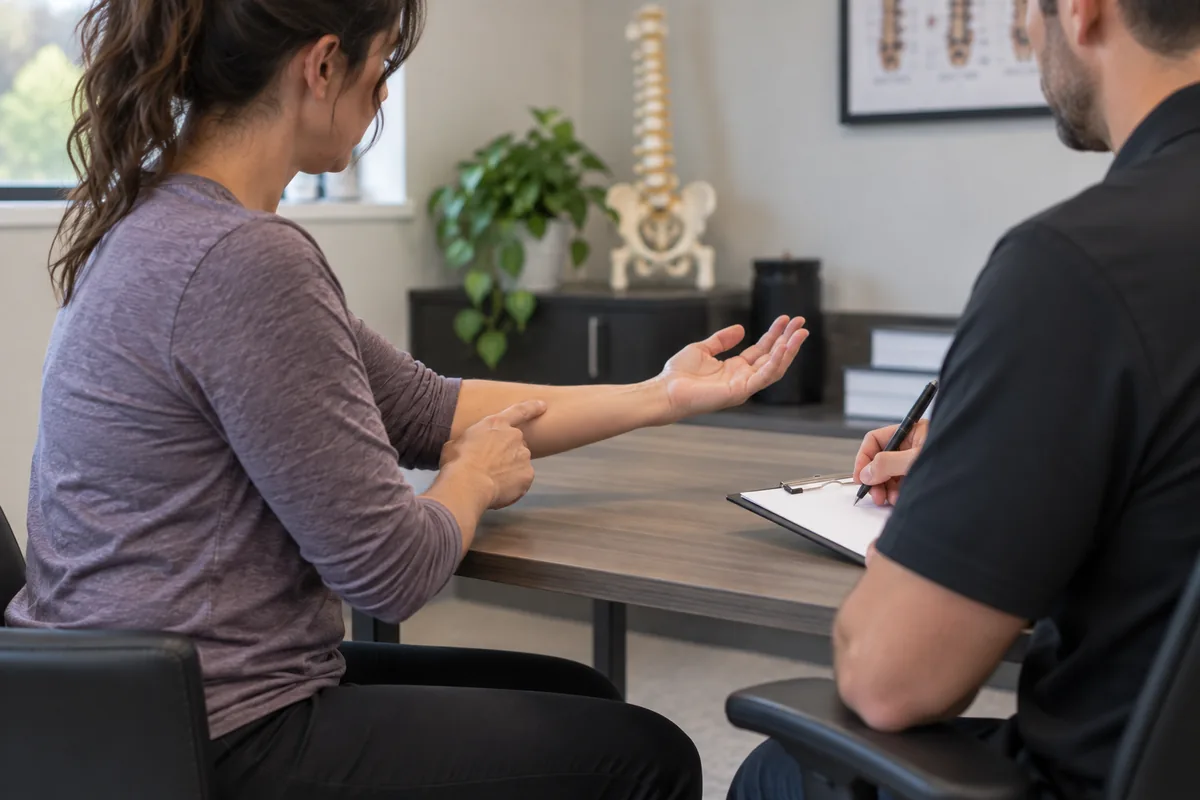
Sunnyvale is a hard place to be sick in. Half the city was born in another country, fewer than four in ten of us speak only English at home, and the medical system here still runs on you finding exactly the right word for what is happening in your arm. Burning. Buzzing. Pins and needles. Asleep. Dead. Heavy. Six words, six different findings. Nobody has fixed that, and we have not either. What we can do is slow down and let you point.

We see this every week in our office. Someone comes in three or four weeks after a fender bender saying the neck pain got better but now their hand tingles at night. That delay between the crash and the nerve symptoms showing up is exactly why so many people miss it at first.
- Sharp, shooting pain down an arm or leg, not just achy or stiff
- Numbness or tingling, especially in the hands, fingers, or feet
- Muscle weakness, like dropping things you'd normally hold fine
- A burning feeling that gets worse when you sit or stand a certain way
- Pain that's worse at night or first thing in the morning
Here's the thing about a pinched nerve after a car accident: it doesn't always hurt right away. Swelling and inflammation build over days, sometimes weeks. That's why we tell every patient the same thing, get checked fast, even if you feel okay right now.
Not sure if what you're feeling counts? If it's spreading past the original injury site, or if it's changing how you move your hand or foot, don't wait on that one.
When a Tingling Feeling Is Not a Pinched Nerve
Not every tingle or numb patch is a pinched nerve. We hear this mix-up all the time, so let's clear it up before you worry more than you need to.
A true pinched nerve usually follows a pattern. It runs down one arm or one leg, it gets worse with certain movements or positions, and it often comes with weakness in a specific muscle group. Poor circulation feels different. So does a low blood sugar tingle, or nerve issues tied to diabetes. Those tend to show up on both sides of the body at once, not just one arm or one leg after a fender bender.
Here's the scenario we see a lot after a Sunnyvale car accident. Someone feels a mild tingle in two fingers the day after impact. They wait, hoping it fades. A month later that tingle turned into constant numbness, and now it's harder to treat.
- Numbness on both sides of the body at the same time, not just one arm or leg
- Symptoms that started years before any accident or injury, with no clear trigger
- Sudden loss of bladder or bowel control, which needs emergency care right away
- Chest pain along with arm tingling, which could point to a heart issue, not a spine issue
- Tingling that's constant and unchanged no matter how you move or sit
If any of those sound like you, please get checked at an ER first. That's not us passing the buck, that's just the answer. But if your tingling started after an accident, gets worse when you turn your neck, or runs down one arm or leg, that's a pattern we see every week, and it's exactly what pinched nerve treatment in Sunnyvale is built to address.
Why Same-Day Evaluation Matters After an Accident
Here's the thing about a pinched nerve. It doesn't always announce itself right away. You walk away from a fender bender feeling shaken but okay, and two days later your arm's gone numb or your neck won't turn without a sharp zing running down it. We see this every week. The impact jolts your spine out of place, a disc shifts, and it starts pressing on a nerve root. That pressure builds quietly at first.
Waiting doesn't help. The longer a nerve stays compressed, the harder it is to calm down and the longer your recovery drags on. A same-day exam catches the problem while it's still small and treatable, not after it's turned into something that flares up every time you sleep wrong or lift a grocery bag.
There's also the claim side of this, and it matters just as much. Insurance adjusters look for gaps between the accident date and your first visit. A gap of even a few days can get used against you, like your injury wasn't serious enough to need quick care. Getting examined right away creates a clean, dated medical record tied directly to the crash - the kind of documentation attorneys need to build a real claim.
So don't wait to see if it gets better on its own.
We offer same-day chiropractic appointments and walk-in care because that window right after an accident is the one that counts most. And most accident cases come with $0 out-of-pocket, so cost isn't a reason to put this off. Se habla español, too, so language shouldn't be a barrier to getting seen fast.
Do not wait this one out.
One call gets you examined today, and we handle the documentation your claim needs.
How Chiropractic Care Treats a Pinched Nerve
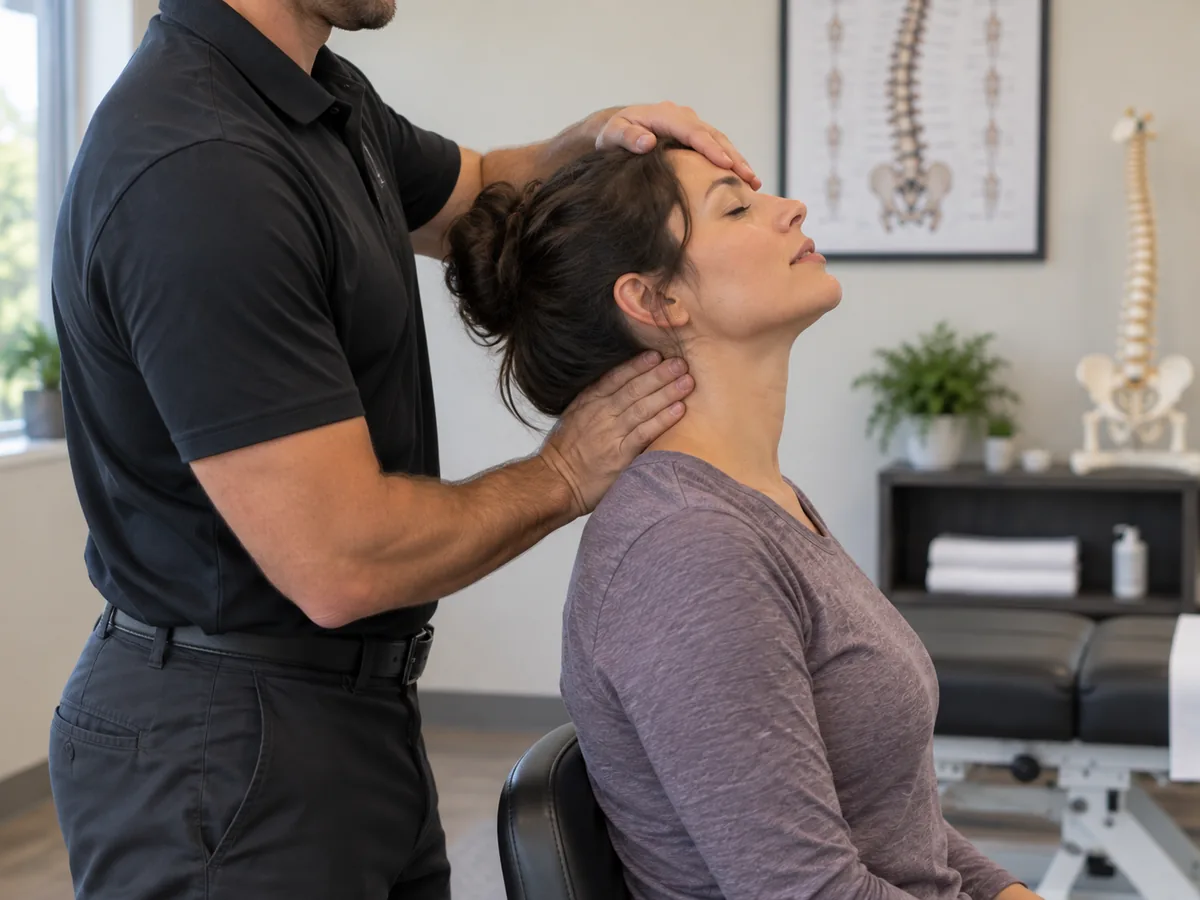
So what do we do about it? First, Dr. Tropea checks where the nerve is getting pinched and how bad the pressure is. That usually means a hands-on exam, checking your reflexes, your range of motion, where the numbness or pain travels. The pattern tells us exactly which nerve root is irritated before we even touch a treatment table.
From there, treatment depends on what's causing the pinch. A disc pressing on a nerve root needs different work than a joint that's just locked up and irritated.
- Manual spinal manipulation to restore motion in the joint that's crowding the nerve
- Non-surgical spinal decompression to gently open space around a disc that's bulging or herniated
- Flexion-distraction, also called the Cox technique, for nerve pressure coming from the lower back
- Traction therapy to take ongoing pressure off an irritated nerve root between visits
- Extremity adjustment when the pinch shows up in the shoulder, wrist, or hip instead of the spine
We don't guess and hope. Every technique we use gets picked based on what the exam shows, not a one-size-fits-all routine. If your pain came from a car accident, this matters even more, we're documenting each finding and each treatment step, so your medical record reflects what happened to your body and what it took to fix it.
Most patients feel some relief within the first few visits, but nerves are stubborn. They took time to get inflamed, and they take a bit of time to calm back down. That's normal, and it's exactly why waiting weeks to start makes the whole process longer.
What Drives the Cost of Pinched Nerve Care
Here's the answer: cost depends on what's pinching the nerve, and how long it's been going on. A nerve irritated by a stiff joint responds differently than one compressed by a bulging disc from a car accident. So the first visit is about figuring out which one you've got. That's what drives everything after it.

Chiropractic pricing in general works on a plan, not a single fee. You get examined, we find the cause, then we build a treatment plan around it. Some folks need a handful of adjustments. Others need spinal decompression therapy or traction therapy over several weeks. The plan is built around your nerve, not a menu price.
- How long you've had symptoms - a pinched nerve from last week behaves differently than one you've lived with for a year
- What's causing the compression - a herniated disc, a bulging disc, or joint restriction each call for a different approach
- Whether it's tied to an accident - injury cases often involve documentation for insurance or legal claims, which is part of the visit itself
- How many areas are involved - a pinched nerve in your neck causing arm symptoms is treated differently than one in your lower back
- What technique fits your body - Activator, Gonstead, Thompson drop table, flexion-distraction, they're not interchangeable
If your pinched nerve came from a car accident, slip and fall, or sports injury, here's what matters most: we work with attorneys on a lien basis. That means most accident cases move forward with $0 out-of-pocket for you while your claim is being handled. You get seen, you get documented for your claim, and the bill waits for the resolution of your case.
Before you book anywhere, ask two things. Ask how they determine what's causing your symptoms, not just where it hurts. And ask whether accident-related care can move forward without upfront cost. Those two answers tell you more than any price list ever will.
Frequently Asked Questions
Nerve pain travels, muscle pain stays put. If you got rear-ended on El Camino Real and your arm goes numb when you turn your head, that's a nerve getting compressed, not a sore muscle. Look for sharp, shooting pain down an arm or leg, tingling in your hands or feet, or weakness like dropping things you'd normally hold. Pain that's worse at night is another red flag worth getting checked.
Pinched nerve symptoms often show up days or weeks later, not right after impact. Swelling builds quietly, and by the time you feel it, the problem has grown harder to treat. A same-day exam catches the pressure while it's still small. It also creates a dated medical record tied to the crash, which matters if an adjuster tries to argue your injury wasn't serious enough to need quick care.
Yes, this happens every week in our office. Someone gets rear-ended, feels shaken but okay, and weeks later their arm goes numb or their hand tingles at night. The impact jolts your spine, a disc shifts, and it starts pressing on a nerve root slowly. That delay between the crash and the symptoms is exactly why so many people miss a pinched nerve at first.
Usually not. A true pinched nerve typically runs down just one arm or one leg, and it gets worse with certain movements or positions. Numbness on both sides of your body at the same time points more toward circulation issues or a condition like diabetes, not a compressed nerve from an accident. If your tingling is one-sided and changes with movement, that pattern fits what we treat every week.
Dr. Tropea starts with a hands-on exam checking your reflexes, range of motion, and where your numbness or pain travels. That pattern tells us which nerve root is irritated before any treatment begins. From there, care depends on the cause. A disc pressing on a nerve gets different treatment than a locked-up joint, so your plan is built around what's happening in your spine.
Yes, if you have sudden loss of bladder or bowel control, chest pain with arm tingling, or numbness on both sides that started years ago with no injury. Those need emergency care first. But if your tingling started after an accident, worsens when you turn your neck, or runs down one arm or leg, that's the pattern pinched nerve treatment in Sunnyvale is built to handle.
Start feeling like yourself again
Call (408) 329-9604 and we will get you in today.