
Hurting right now?
Call and we will get you seen today, so you can get back to sleeping, working and moving without pain.
How a Herniated Disc Is Diagnosed After an Injury
Here's the thing about a herniated disc. It doesn't always announce itself. You might just feel stiff, or notice a dull ache down one leg. Some patients tell us they thought it was 'just soreness' from the crash, then a week later they can barely bend over. We see this every week, especially after fender benders on El Camino Real where the impact is low speed but the whiplash effect on your spine is real.
Golf is year round here. Two city courses, Sunnyvale and Sunken Gardens, and weather that never makes you stop. A swing turns your lower spine hard and fast while your feet stay planted, which is rough on a disc that is already bulging. Nothing ever gets a break, so a disc that had been coping quietly stops coping.
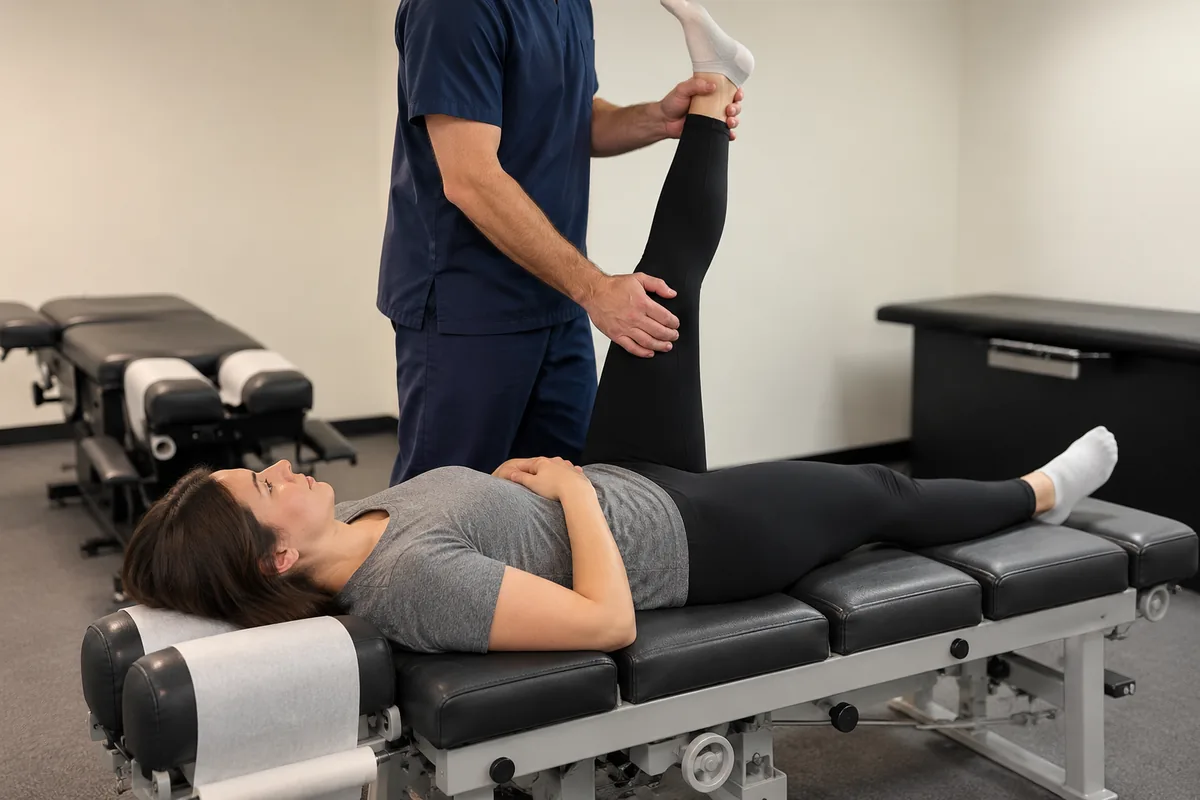
So how do we find it? First, we ask you to walk us through what happened and where it hurts. Then we do a hands-on exam, checking your reflexes, your strength, and how your spine moves. We're looking for nerve involvement, not just muscle soreness. If your leg tingles or your grip feels weak, that's a nerve talking to us.
- We take your full accident history, including how the collision or fall happened
- We test reflexes, strength, and sensation to check for nerve compression
- We assess spinal movement and pinpoint exactly where the pain starts
- We document every finding the same day, creating a clear medical record
- We refer for imaging when the exam points to a disc issue that needs it
That same-day documentation matters more than people realize. Insurance companies look for gaps between the accident date and your first exam. A gap gives them room to argue your injury isn't related to the crash. Getting checked right away closes that gap and protects your case, not just your back.
Non-Surgical Treatment Options for a Herniated Disc
So what does treatment look like? Good news first. Most herniated discs respond well to care that never involves a scalpel.
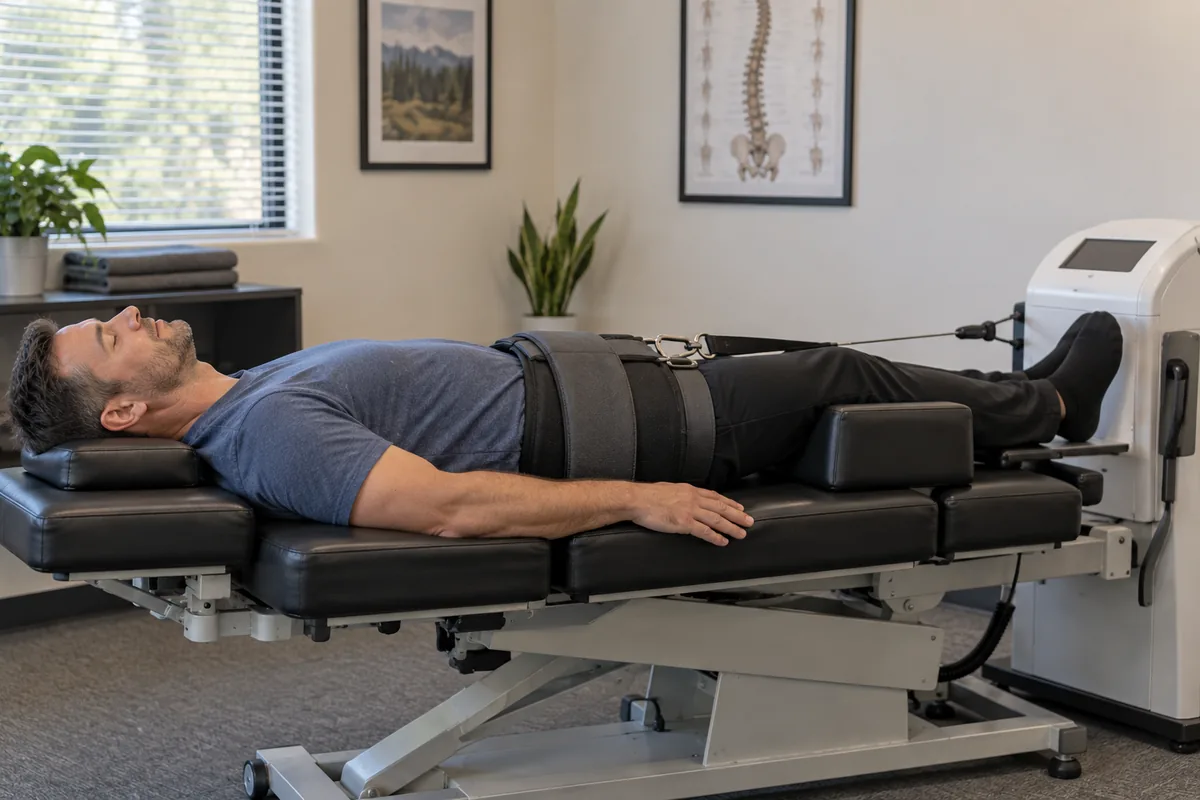
We build your plan around what your disc needs to heal, not a one size fits all routine. Some patients need gentle manual spinal manipulation to take pressure off the nerve. Others do better starting with non-surgical spinal decompression, where we use a traction table to slowly stretch the spine and create space around the disc. That space matters, it's what lets a bulging or herniated disc pull back off the nerve it's pinching.
- Non-surgical spinal decompression to relieve pressure on the affected disc
- Traction therapy to open up space between vertebrae
- Flexion-distraction (Cox) technique, a gentle approach built for disc injuries
- Manual spinal manipulation once inflammation calms down
- Shockwave therapy for related muscle tightness and pain
We don't jump straight to the rougher adjustments on a fresh disc injury. That's how you end up making things worse. Instead we start slow, track how you respond, and adjust the plan visit by visit.
Patients tell us the pain down the leg or arm eases before the back pain itself does. That's a good sign, it means the nerve pressure is letting up.
Every visit gets documented. That matters for two reasons. First, it tells us if the treatment plan is working or needs to change. Second, if your herniated disc came from a car accident, that paper trail becomes part of the record your attorney or the insurance company will ask for later.
When Back Pain Is Not a Herniated Disc
Not every ache after a fender bender or a rough weekend of yard work is a herniated disc. We see this every week. Someone walks in bracing their back, sure the worst has happened, and it turns out to be a strained muscle that's just angry and swollen.
A muscle strain usually feels like a tight, sore band across your lower back. It hurts more when you move a certain way, but it doesn't shoot down your leg. A herniated disc is different. It presses on a nerve, so you'll often feel pain, numbness, or tingling running from your back into your hip, leg, or foot. That radiating pattern is the tell.
So how do you know which one you've got? Sometimes you can't tell right away. Swelling and muscle guarding after an accident can mimic nerve pain for the first day or two. That's exactly why we don't guess. A same-day exam sorts out muscle from nerve from disc, and it puts findings on paper before symptoms shift one way or the other.
Here's when it's probably not a disc problem, and you can likely manage it with rest, ice, and gentle movement for a few days:
- Pain stays in one spot and doesn't travel down an arm or leg
- It eases up when you change position or lie flat
- No numbness, tingling, or weakness in your hands or feet
- The soreness came from lifting or twisting, not an impact or crash
- It's already improving day by day instead of getting worse
But if pain showed up after a car accident, a fall, or a hard hit during sports, don't wait it out. Disc injuries can hide behind swelling for days, then flare up once the adrenaline wears off. If you're unsure which camp you fall into, that's common, and it's exactly what an exam is for.
Warning Signs That Need Immediate Medical Attention
Some pain can wait a day or two. Some can't. If you're dealing with a possible herniated disc, certain signs mean you shouldn't wait at all - you need to be seen the same day.
- Numbness or tingling that runs down your leg past the knee, especially into your foot
- Weakness in your leg or foot, like your ankle keeps giving out or you're dragging your toes
- Trouble controlling your bladder or bowels
- Pain that's getting worse day after day instead of easing up
- Sharp pain that shoots down one leg every time you cough, sneeze, or bend forward
That last one, the shooting leg pain, we hear about constantly. Someone bends to pick something up off the floor and it feels like lightning down the back of their leg. That's the disc pressing on a nerve root, and it's not something to just stretch out and hope for the best.
Bladder or bowel changes are the one sign that always means go get checked right away, no exceptions.
A lot of people brush off numbness because it doesn't hurt as bad as sharp pain does. But numbness usually means the nerve's already under real pressure, and the longer it sits there, the harder it is to reverse. We've seen folks wait weeks thinking it'll resolve on its own, and by the time they come in, recovery takes a lot longer than it would have with early care.
If your pain came from a car accident, slip and fall, or sports injury, getting checked fast does two things at once. It gets you moving toward relief, and it puts your injury on record while the details are still fresh, which matters a great deal if you end up filing a claim.
What to Expect During Care and Documentation for Your Claim
So what happens when you walk in? First visit, we get you examined the same day. No waiting weeks for someone to look at your back while the disc damage gets worse. Dr. Tony Tropea checks your range of motion, tests your reflexes, and asks about pain patterns that point to a herniated disc versus a strained muscle. We're documenting everything from minute one.

That documentation piece matters more than most people realize. Insurance companies and attorneys need a clear paper trail connecting your accident to your injury. Every visit gets written up. Every symptom gets logged. Every treatment gets recorded with dates and details.
- Initial exam findings tied directly to the date of your accident
- Ongoing progress notes showing improvement or setbacks over time
- Treatment records covering spinal decompression, adjustments, and any other care you receive
- Attorney-ready reports your legal team can use without chasing us for paperwork
We work on a lien basis with attorneys, so most accident cases mean $0 out-of-pocket for you while care is happening. You focus on healing. We focus on the record. Patients tell us they had no idea their case needed this much documentation until we explained it.
Se habla espanol, and our team makes sure language never gets in the way of you understanding your treatment plan or your claim status.
Frequently Asked Questions
You should get checked the same day symptoms start, even if the pain feels mild at first. We see this often with low-speed fender benders on El Camino Real, where the impact seems small but whiplash still stresses your spine. Waiting creates a gap between the accident and your exam, and insurance companies use that gap to question your claim. A same-day visit documents your injury while it's fresh and gets treatment started before things worsen.
A pulled muscle usually stays in one spot, while a herniated disc sends pain, numbness, or tingling down your leg or arm. Muscle strain feels like a tight, sore band that hurts more with certain movements but doesn't radiate. A disc issue presses on a nerve, so the pain travels past your hip into your leg or foot. If you're not sure which one you have, that's normal, and it's exactly what a same-day exam sorts out.
Most herniated discs respond well to non-surgical care like spinal decompression, flexion-distraction technique, and gentle manual adjustments once inflammation settles down. We tailor your plan based on how your disc responds, starting slow instead of jumping into rougher treatment on a fresh injury. Many patients notice the leg or arm pain ease before the back pain does, which is a sign the nerve pressure is letting up. Every visit gets tracked so we can adjust your plan as you heal.
Numbness or tingling past your knee, leg weakness, or trouble controlling your bladder or bowels all mean you need to be seen the same day. Sharp pain shooting down one leg when you cough, sneeze, or bend forward is another common sign we hear about constantly. Pain that keeps getting worse instead of easing up is also a red flag. These symptoms point to nerve involvement, and waiting can let the problem get worse before treatment starts.
Same-day documentation creates a clear medical record that ties your injury directly to the accident date. Insurance companies look for gaps between when the crash happened and when you first got examined, and they use those gaps to argue your injury isn't related. Getting checked right away in Sunnyvale closes that gap and protects your case. It also gives your attorney a paper trail showing exactly how your treatment progressed visit by visit.
Yes, a herniated disc can come from lifting or twisting, not just a crash or fall. If pain stays in one spot, eases when you change position, and has no numbness or tingling, it's likely a strain you can manage with rest and gentle movement. But if pain came from an impact like a car accident or hard fall, don't wait it out. Disc injuries can hide behind swelling for days before flaring up once the adrenaline fades.
Start feeling like yourself again
Call (408) 329-9604 and we will get you in today.