
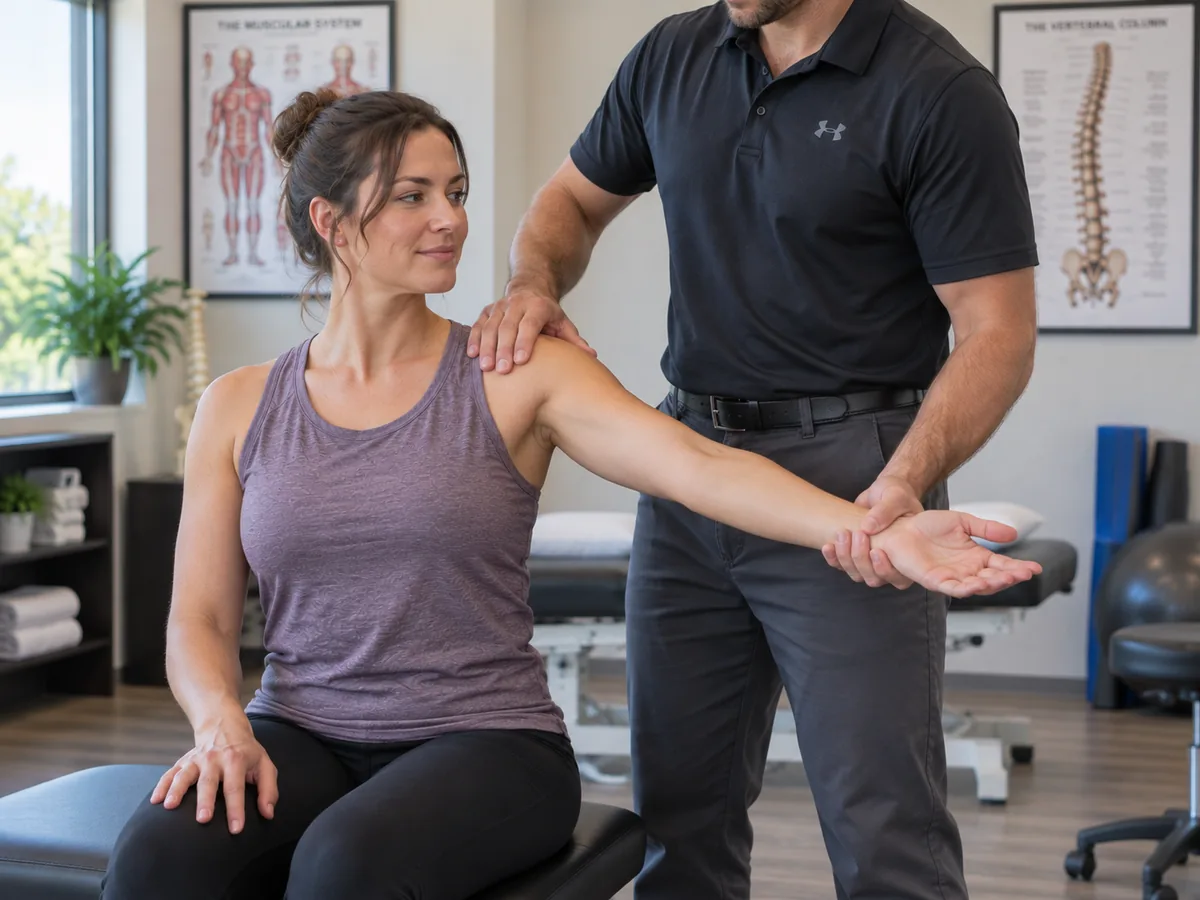
Shoulder Pain After a Car Accident, Fall, or Sports Injury
Your shoulder took the hit and now it won't let you forget it. Maybe you were belted in when another car hit you on El Camino Real and the strap yanked your shoulder back hard. Maybe you slipped on a wet floor and caught yourself with an outstretched arm. Or you took a bad fall playing rec league sports over the weekend. Whatever happened, the pain you're feeling now is your body telling you something got hurt.
Washington Park has two tennis courts and two basketball courts for a city of about 150,000, so people play when they can get on, which tends to mean hard, once a week. That is the worst version of these sports for a shoulder. Serving and shooting run the rotator cuff to the end of its range, and a body that sat still for six days does not absorb that well. Then comes the week where reaching for a shelf stops being automatic and you notice you have been using the other arm for a while without deciding to.

Shoulder injuries from accidents are sneaky. The adrenaline from the moment can mask how bad it really is, so a lot of people wait a few days before calling anyone. That's usually when the pain gets worse, not better. It's a pattern we notice often - someone walks in almost apologizing, saying it felt fine right after the accident.
- Seatbelt strain across the shoulder and collarbone from sudden braking or impact
- A hard fall onto an outstretched hand or the side of the shoulder
- A sports collision or awkward landing that jams the joint
- Whiplash-related tension that pulls into the shoulder and upper back
The pain often traces back to soft tissue strain or joint irritation from sudden force. Sometimes it points to something deeper. You won't know which one you're dealing with without a real exam. Waiting doesn't make that answer clearer, it just gives the injury more time to settle in.
Our shoulder pain treatment starts with figuring out exactly what happened to your joint and writing it all down. Both your recovery and your claim have a solid foundation. That paperwork matters just as much as the treatment itself if an insurance company or attorney gets involved later.
Muscle Strain vs. Rotator Cuff Injury: Telling the Difference
A strained muscle usually feels sore and tight. It aches when you move a certain way, then eases up with rest. A rotator cuff problem feels different. There's often a deep ache that doesn't go away, weakness when you try to lift your arm overhead, and sometimes a catching or grinding feeling inside the joint. Patients tell us the same thing: it hurt right after the crash, but they figured it was just from gripping the wheel or getting jolted around.
Here's the tricky part. Whiplash and rotator cuff tears can show up together. The neck pain often gets all the attention while the shoulder gets ignored. So the shoulder injury sits there, untreated, for weeks.
- Pain that's worse at night or when lying on that side often points to the rotator cuff, not a strain.
- Weakness lifting a bag or reaching a shelf, that's a red flag we take seriously.
- A dull, deep ache in the joint itself feels different from the tightness of a pulled muscle.
- Popping or catching when you rotate your arm needs a real look, not guesswork.
We can't tell you which one you have without checking your range of motion and strength. That's the honest answer. Guessing at home, or waiting to see if it gets better, is how a small tear turns into a bigger problem. If this happened in a crash, it needs to be written down now, not next month.
When Shoulder Pain Signals a Red Flag
Not every ache needs a visit. If you tweaked your shoulder lifting a box and it's just sore for a day or two, ice it and rest. That's normal. But some signs mean something deeper is going on, and waiting makes it worse.

This comes up often with car accident patients. They walk in saying their shoulder feels tight, nothing major. Then we ask a few questions and find out they can't raise their arm above their head anymore, or it's been three weeks and it's not getting better at all. That's your body telling you something's wrong.
- Pain that spreads down your arm or into your neck instead of staying in one spot
- Weakness when you try to lift or push, like your shoulder just gives out
- Numbness or tingling in your hand or fingers
- Pain that's worse a week after an accident than it was the day it happened
- A popping or grinding feeling every time you move your arm
Here's the thing about whiplash and impact injuries: the shoulder often takes a hit nobody notices at first. Adrenaline masks pain right after a fender bender on El Camino Real or a fall at work. By the time swelling sets in, days have passed, and the injury has already started scarring the wrong way. Sciatica gets attention fast because it shoots down your leg. Shoulder damage gets ignored because it just feels like stiffness, until it doesn't.
If any of those red flags sound familiar, don't wait it out.
How Chiropractic Care Treats Shoulder Pain Over Time
Shoulder pain from a car accident or a bad fall doesn't fix itself overnight. It usually takes weeks, sometimes longer, depending on what's going on in there. This is a pattern we see often: someone comes in thinking it's just a strain, and it turns out to be something deeper in the joint or the nerves feeding it.

The first visit is about finding out what's really hurt. Dr. Tropea checks your range of motion, tests strength, and looks for signs of nerve involvement before touching anything. From there, treatment usually combines a few approaches. Manual spinal manipulation and extremity adjustment work on the joint itself. If the shoulder pain is tied to a pinched nerve in the neck or upper back, spinal decompression therapy or traction therapy can take pressure off that nerve so the shoulder starts healing instead of just feeling numbed.
Shockwave therapy sometimes comes into play for stubborn soft tissue damage that isn't responding fast enough. Not every case needs it, but when it fits, it can speed things along.
Here's what a typical path looks like for a lot of our patients:
- Week 1 to 2: reduce pain and inflammation, restore basic movement
- Week 3 to 4: build strength back into the shoulder and surrounding muscles
- Week 5 and beyond: fine-tune movement, catch anything still lagging, plan discharge
Every visit gets documented. That's not just paperwork, it's part of building the real medical record your attorney or insurance adjuster will need later. Skip visits or wait too long between them, and that record gets weaker, and so does your claim.
Most people notice real change by week four or five, though some heal faster and some slower. It depends on the injury, not the calendar.
Frequently Asked Questions
You should get checked within a day or two, even if the pain seems mild at first. Adrenaline after a crash on roads like El Camino Real can hide how bad the injury really is. Pain that feels minor on day one often gets worse by day three. Getting examined early means the injury gets documented while it's fresh, which helps both your recovery and any claim you may need to file later.
A strain usually feels sore and tight, and it eases up with rest. A deeper injury like a rotator cuff problem often causes weakness lifting your arm, a dull ache that won't quit, or a catching feeling inside the joint. Pain that's worse at night or when lying on that side is a signal worth taking seriously. You really can't tell for sure without a hands-on exam of your strength and range of motion.
You'll start by describing exactly how the injury happened, in your own words, and we write down every detail. Next we test your range of motion, strength, and pinpoint where it hurts most. We also check your neck and upper back, since shoulder pain after a crash rarely shows up alone. You'll leave knowing what we found and what treatment looks like, with everything documented for your records.
Yes, whiplash tension often pulls into the shoulder and upper back, not just the neck. This is common after impacts on busy Sunnyvale roads where sudden braking jerks your whole upper body. The problem is the neck pain usually gets all the attention, so the shoulder injury goes unnoticed for weeks. If your shoulder hurts along with neck stiffness after a crash, both areas need a real look.
Pain spreading down your arm, numbness in your fingers, or weakness when lifting are all signs you shouldn't ignore. So is pain that gets worse a week after the accident instead of better. A popping or grinding feeling when you move your arm also needs attention. If your shoulder felt tight right after a fender bender but now you can't raise your arm overhead, that's your body telling you something's wrong.
This happens because adrenaline masks pain in the moments right after a crash or fall. By the time swelling sets in, days have passed, and the injury has already started healing the wrong way without treatment. This is one of the most common patterns we see with accident patients in Sunnyvale. If your pain is climbing instead of fading, that's a reason to come in, not a reason to wait longer.
Start feeling like yourself again
Call (408) 329-9604 and we will get you in today.